





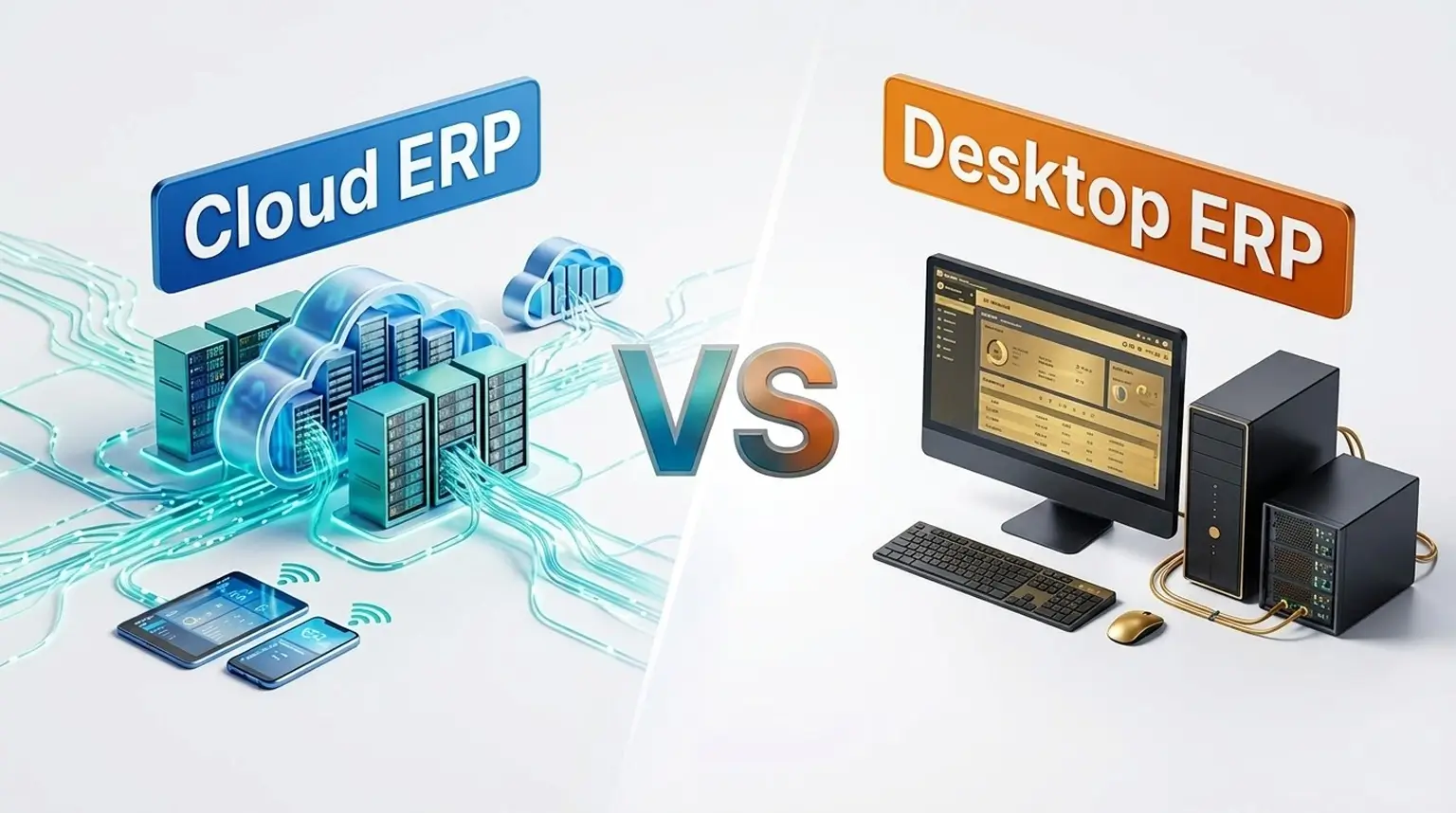
Cloud ERP vs Desktop ERP: Which is Better for Your Business in India?
Introduction
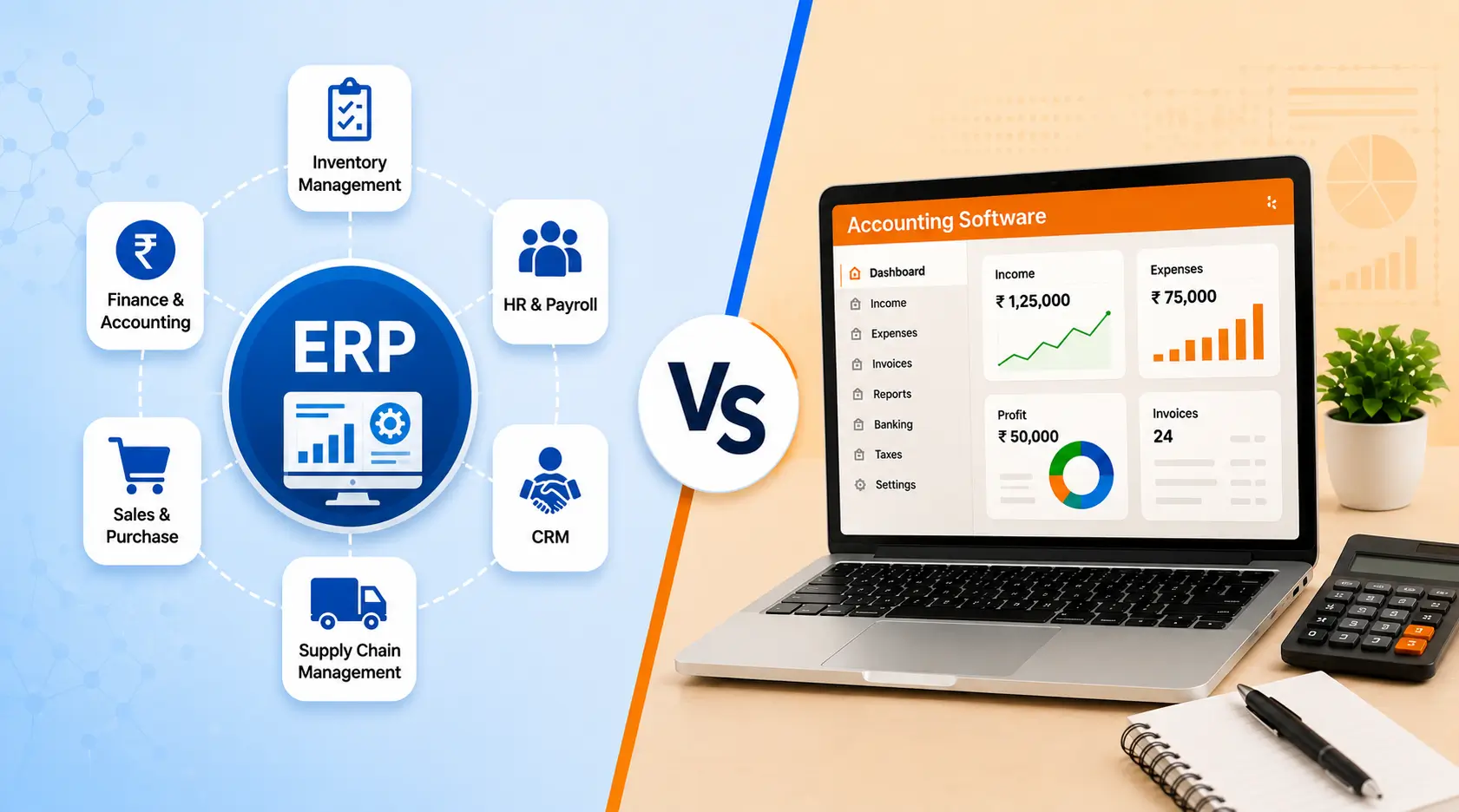
Choosing the right ERP system is one of the most important decisions for any growing business. Whether you operate in the apparel, garment, footwear, jewellery, wholesale, retail, or manufacturing industry, your ERP software directly impacts efficiency, profitability, and business growth.
However, many business owners struggle with one common question: Should I choose Cloud ERP Software or Desktop ERP Software?
Both solutions offer unique advantages. While Desktop ERP provides offline reliability and local control, Cloud ERP offers flexibility, scalability, and real-time access from anywhere.
In this guide, Alpha ERP Solutions explains the key differences between Cloud ERP and Desktop ERP to help you choose the right solution for your business.
What is Desktop ERP Software?
Desktop ERP Software is installed directly on a local computer or server within your business premises.
All business data, including inventory, sales, accounting, and customer information, is stored locally and managed through your internal network.
Key advantages include:
- One-time software investment
- Offline accessibility
- Local data control
- No dependency on internet connectivity
As a result, many traditional businesses continue to rely on Desktop ERP Software for daily operations.
What is Cloud ERP Software?
Cloud ERP Software is hosted on secure cloud servers and can be accessed through the internet.
Users can log in from desktops, laptops, tablets, or smartphones and access real-time business information from any location.
Key advantages include:
- Remote accessibility
- Automatic backups
- Real-time reporting
- Multi-branch connectivity
- Lower upfront investment
Therefore, Cloud ERP Software has become increasingly popular among modern businesses looking for flexibility and scalability.
Cloud ERP vs Desktop ERP: Key Differences
1. Accessibility and Remote Access
Desktop ERP Software
Desktop ERP is generally limited to the computer or local network where it is installed. Therefore, accessing business information remotely can be difficult.
Cloud ERP Software
Cloud ERP allows business owners and employees to access real-time information from anywhere using an internet connection.
This feature is especially beneficial for businesses operating multiple branches or managing remote teams.
2. Initial Investment and Cost
Desktop ERP Software
Desktop ERP usually involves a one-time license fee, making it attractive for businesses looking to avoid recurring subscription costs.
Cloud ERP Software
Cloud ERP typically operates on a monthly or annual subscription model. As a result, businesses can reduce their initial investment while accessing enterprise-grade features.
3. Data Security and Backup
Desktop ERP Software
Data protection depends on local backups and system maintenance. If backups are not performed regularly, businesses may risk data loss.
Cloud ERP Software
Cloud ERP automatically stores and backs up business data on secure cloud servers.
Therefore, even if a device fails or gets damaged, data remains safe and accessible.
4. Multi-Branch Management
Desktop ERP Software
Managing multiple branches often requires separate installations and manual consolidation of business data.
Cloud ERP Software
Cloud ERP connects all locations through a centralized platform.
As a result, businesses can monitor inventory, sales, accounting, and operations across all branches in real time.
5. Updates and Maintenance
Desktop ERP Software
Software updates often require manual installation and technical support.
Cloud ERP Software
Updates are automatically deployed by the service provider without disrupting business operations.
Therefore, businesses always have access to the latest features and security enhancements.
6. Internet Dependency
Desktop ERP Software
Desktop ERP can operate without internet connectivity, making it suitable for locations with unreliable networks.
Cloud ERP Software
Cloud ERP requires a stable internet connection to function effectively.
Consequently, businesses should evaluate local internet infrastructure before implementation.
Which ERP Solution is Right for Your Business?
| Business Requirement | Recommended ERP |
|---|---|
| Single store operation | Desktop ERP |
| Limited internet availability | Desktop ERP |
| Multiple branches | Cloud ERP |
| Remote business access | Cloud ERP |
| Growing business | Cloud ERP |
| Automatic backups | Cloud ERP |
| Real-time reporting | Cloud ERP |
Ultimately, the right choice depends on your business goals, operational structure, and future expansion plans.
Cloud ERP for Jewellery Businesses
Jewellery businesses have unique operational requirements that standard business software often cannot handle.
A dedicated Jewellery ERP Software solution helps businesses manage:
- Gold and silver inventory
- Diamond tracking
- Hallmark records
- Making charges
- Stone-wise costing
- GST billing
Cloud-based Jewellery ERP Software provides real-time visibility across showrooms, workshops, warehouses, and branch locations.
Therefore, retailers, wholesalers, and manufacturers can manage inventory and sales more efficiently.
Explore our Jewellery ERP Software solutions for advanced jewellery business management.
Cloud ERP for Garment, Apparel and Footwear Retailers
Retail businesses in the apparel and footwear industry manage thousands of SKUs across different sizes, colours, brands, and categories.
A powerful Garment ERP Software helps businesses:
- Manage inventory efficiently
- Track size-wise stock
- Monitor seasonal demand
- Handle barcode billing
- Manage multiple stores
Similarly, Footwear ERP Software supports size-wise inventory management, barcode generation, and real-time stock tracking.
With Cloud ERP, retailers can access live sales and inventory information from any location.
Learn more about our Garment ERP Software and Footwear ERP Software solutions.
The Hybrid Advantage: Why Alpha ERP Offers Both
Every business has unique requirements.
Some businesses prefer the reliability of Desktop ERP, while others require the flexibility of Cloud ERP.
Therefore, Alpha ERP Solutions offers both deployment options through:
- G-Soft ERP for Apparel, Lifestyle, Garment, and Footwear Businesses
- J-Soft ERP for Jewellery Retailers, Wholesalers, and Manufacturers
As your business grows, you can easily transition from Desktop ERP to Cloud ERP without changing software platforms or retraining employees.
Frequently Asked Questions
Is Cloud ERP Software safe for business data?
Yes. Cloud ERP Software uses secure servers, encryption technologies, and automated backups to protect business information.
Can I migrate from Desktop ERP Software to Cloud ERP Software?
Yes. Alpha ERP supports smooth migration from Desktop ERP to Cloud ERP while preserving historical business data.
Which ERP is better for multi-branch businesses?
Cloud ERP Software is generally the preferred choice because it provides centralized reporting and real-time visibility across locations.
Is Cloud ERP suitable for small businesses?
Yes. Cloud ERP Software is suitable for small, medium, and large businesses because subscription pricing reduces upfront investment.
Does Desktop ERP work without internet?
Yes. Desktop ERP Software can operate without internet connectivity.
Conclusion
There is no one-size-fits-all answer when choosing between Cloud ERP and Desktop ERP.
If your business requires remote accessibility, real-time reporting, automatic backups, and multi-branch management, Cloud ERP Software is the ideal choice.
However, if you require offline functionality and local data control, Desktop ERP Software remains a reliable option.
With Alpha ERP Solutions, businesses can choose the ERP deployment model that best fits their needs today while remaining ready for future growth.